

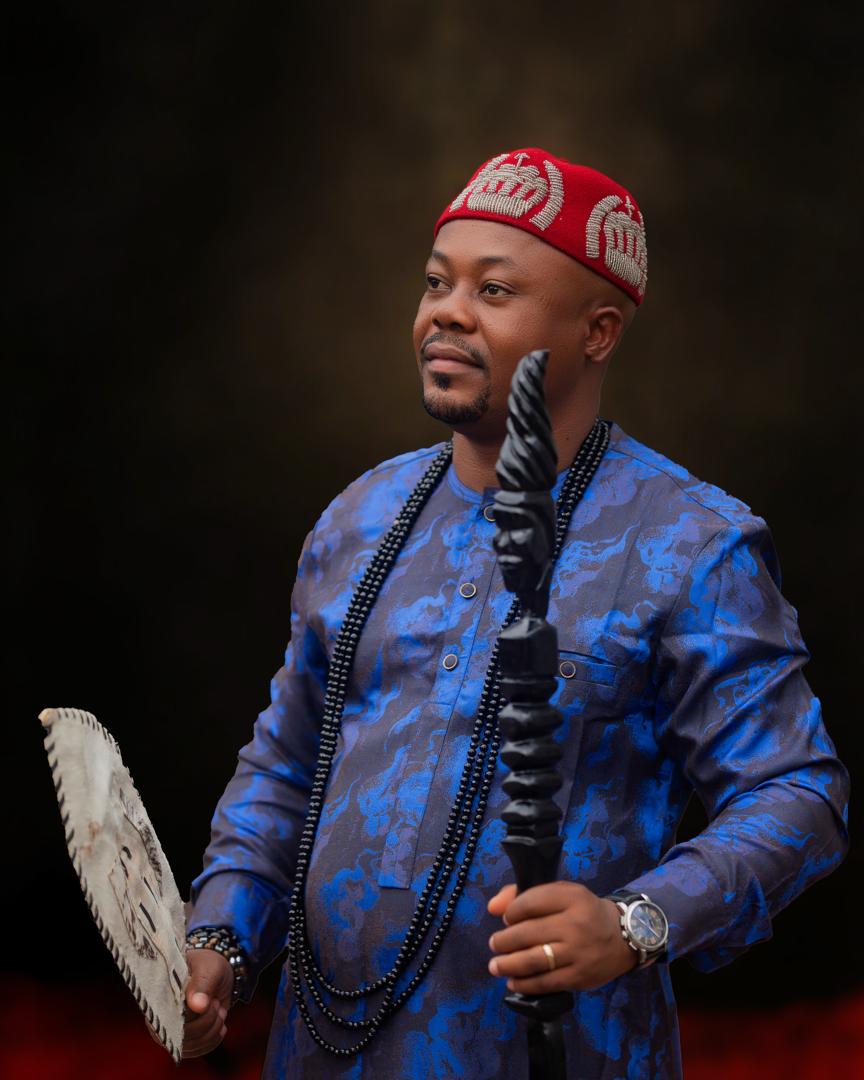
There are people whose names become attached to positions, and there are people whose names become attached to seasons of transformation. In the story of Amiyi Akah, Chief Vincent O. Egbuchilem, popularly known by his traditional title, Ijele Nwachinemere 1 of Amiyi Akah, belongs to the latter.
His story is not simply the story of a man who occupied the office of President General of the Amiyi Akah Federal Union. It is the story of a man who accepted the responsibility of leading his people at a difficult time and chose to see leadership not as a privilege, but as a call to service.
Beyond his community leadership, Chief Vincent O. Egbuchilem is also a member of the Knights of St. John International, an association whose tradition of faith, service, discipline, and commitment to humanity reflects values that have also shaped his approach to leadership and community service.
His tenure would become a defining chapter in the history of Amiyi Akah, marked by challenges, responsibility, and efforts to move the community forward.
As President General of the Amiyi Akah Autonomous Community, Chief Vincent Egbuchilem carried the responsibility of steering a community with a proud history, strong personalities, different interests and an increasingly dispersed population spread across Nigeria and the wider world. Yet, rather than allowing those differences to become permanent barriers, his administration placed considerable emphasis on rebuilding trust, strengthening unity and restoring confidence in community leadership.
Chief Vincent's leadership came at a period when the country, and particularly Imo State, was experiencing serious security and economic challenges. He acknowledged openly that the journey would not always be easy.
But perhaps that was part of what defined his leadership. He understood that community leadership is rarely about having perfect circumstances. It is about making the best possible decisions with the resources available, remaining accountable to the people and continuing to move forward even when the road becomes difficult.
Under his administration, transparency, accountability, prudent management and purposeful leadership were presented not merely as political language, but as principles upon which the administration sought to build its relationship with the people of Amiyi Akah.
One of the achievements he considered particularly important was the restoration of trust and confidence in the leadership of the Amiyi Akah Federal Union. For Chief Vincent, this was more than an administrative accomplishment. It was an indication that the relationship between the people and their leadership could be rebuilt through engagement, openness and a shared commitment to the community.
The philosophy behind his administration was deeply rooted in the idea of legacy. Chief Vincent repeatedly spoke about leaving something behind that would outlive his tenure. His ambition was not simply to complete a term in office, but to establish structures and initiatives that could continue serving the community long after his administration had ended.
That philosophy was reflected in a number of developmental projects undertaken during his administration. Among the achievements recorded were the construction of modern classroom blocks at the Town's School, the development of a modern health centre, the relocation of Saint Saviours Secondary School to Amiyi Akah by the Catholic Diocese of Orlu, improvements to the community's internal security system, the installation of streetlights, the reconstruction of the Amiyi Akah Civic Hall, the recovery of the community hospital and the construction of city gates around the boundaries of the community.
These projects represented different dimensions of community development, including education, healthcare, security, infrastructure and social life.
For a community, development is rarely defined by one spectacular project. It is often found in these practical improvements that make everyday life better for ordinary people.
Another important part of Chief Vincent's leadership story was his attention to the younger generation. He recognized that Amiyi Akah possesses significant human potential, particularly among its youths. Rather than viewing young people only as beneficiaries of community development, his administration sought to position them as participants in the community's future.
This vision contributed to the constitution and inauguration of the Amiyi Akah Sports Council, with the understanding that sport could become a powerful avenue for youth development, talent discovery, discipline and legitimate economic opportunity.
The idea was simple but powerful. A community blessed with talented young people must create pathways through which those talents can be discovered, developed and put to productive use. His proposed agenda also included youth entrepreneurship and skills development, with the goal of encouraging young people to pursue legitimate ventures and become productive contributors to their families and society.
For Chief Vincent's administration, development could not be separated from security. The administration supported the reinvigoration and refurbishment of Amiyi Akah's internal security structure, including improvements in equipment, mobility, communication and manpower. The effort received significant support from citizens at home and in the diaspora.
Chief Vincent specifically acknowledged the role of the Amiyi Akah Diaspora Citizens Forum, the security committee, the Youth Vanguard and the traditional leadership in strengthening the community's security apparatus. The administration reported that the community's security body had earned recognition from the state police command for its organizational capacity, discipline and tactical ability.
Whether viewed through the lens of infrastructure, security or social organization, the underlying message of his leadership was consistent. A community must be able to protect, educate and provide opportunities for its people if it is to build a sustainable future. Chief Vincent never presented the story of his administration as the achievement of one man.
He repeatedly acknowledged the role of the people, the traditional institution, village leadership, women, youths, diaspora organizations and other stakeholders. He described his nine man AFU Executive as a formidable team and credited the collective participation of the people as an important reason for the progress achieved during his tenure.
He also expressed appreciation to HRH Eze Barr. Francis Okechukwu Ahanotu, Iyi 1 of Amiyi Akah, for his guidance and interventions, as well as to the Council of Chiefs and the Eze's Cabinet for their counsel. This willingness to recognize others is an important part of understanding his leadership style.
For him, Amiyi Akah's strength was not simply in its size or resources. Its greatest strength was in its people. As his administration approached the end of its tenure in 2023, Chief Vincent's attention was already turning toward what should come next.
His proposed agenda included agriculture, youth development, entrepreneurship, constitutional reform, town planning, community security, effective town union elections and the establishment of an Amiyi Akah Christian Association.
The proposals reveal something important about his understanding of leadership. He did not see development as a destination.
He saw it as a continuing journey. Agriculture could provide livelihoods. Skills acquisition could give young people alternatives. Town planning could improve order and peaceful coexistence. A stronger constitution could provide clearer governance. Community wide spiritual and social engagement could strengthen the moral foundation of the people.
These were not isolated ideas. Together, they represented a broader vision of a community capable of organizing itself, protecting its people and creating opportunities for future generations. Every leader eventually leaves office, but the real question is what remains after the office is gone.
In the case of Chief Vincent O. Egbuchilem, the record points to an administration that sought to leave behind more than memories of a tenure. It sought to leave structures, restored confidence, developmental projects and a renewed conversation about what Amiyi Akah could become. His own words captured the humility that accompanied his understanding of leadership. He acknowledged that there were expectations his administration could not meet and apologized for things that remained undone, reminding the people that those entrusted with leadership are still human.
Perhaps that is one of the most human parts of his story. Leadership is not the absence of imperfection. It is the willingness to accept responsibility, listen to criticism, learn from experience and continue serving.
Chief Vincent O. Egbuchilem's chapter in the story of Amiyi Akah is therefore best understood not merely through the title he held, but through the responsibilities he accepted. He served at a time when unity was being tested, security was a concern, development was urgently needed and the future of the younger generation demanded attention.
And through it all, he continued to speak of one central idea: legacy.
A legacy built on service.
A legacy built on accountability.
A legacy built on development.
And above all, a legacy built on the belief that when the sons and daughters of Amiyi Akah come together, there is very little that their community cannot achieve. Chief Vincent O. Egbuchilem, Ijele Nwachinemere 1 of Amiyi Akah, remains part of the continuing story of a community determined to stand tall, preserve its heritage and build a better future for generations yet unborn.
